
Daily News – 1st April ’26
Daily News
Markets Surge Globally as Trump Signals Potential Conclusion to Iran Conflict
01 April 2026
Today in Brief
Global indices rallied as President Trump hinted at a military withdrawal from Iran within weeks, sparking the best day for Wall Street since last May.
In corporate news, OpenAI closed a historic $122 billion funding round, while Unilever and McCormick announced a massive $65 billion food merger.
South Korea’s Kospi leads rebound in Asia markets as Trump says Iran war could end in weeks
Asia-Pacific markets rebounded Wednesday after statements from U.S. President Donald Trump raised hopes that the Iran war could end soon. On Tuesday stateside, Trump said the U.S. could leave Iran in “two or three weeks,” adding “We leave because there’s no reason for us to do this.” U.S. crude futures were up 1.34% at $102.72 a barrel as of 10.42 p.m. ET, while Brent futures climbed 1.27% to trade at $105.29 per barrel. South Korea’s Kospi led gains in the region, surging over 6.5%, while the small-cap Kosdaq gained 5.38%, after data showed South Korean exports in March jumped 48.3% from a year earlier, beating Reuters poll estimates of 44.9%. Japan’s Nikkei 225 rose 4.04%, led by financial stocks, while the broad-based Topix added 3.79%.
Dow surges 1,100 points, S&P 500 posts best day since May as hopes grow for end of Iran war
Stocks rose on Tuesday following new reports that gave investors hope that the Iran war could soon come to an end. The Dow Jones Industrial Average was up 1,125.37 points, or 2.49%, and closed at 46,341.51. The move came after an unconfirmed report said Iranian President Masoud Pezeshkian is open to ending the war with guarantees. The S&P 500 gained 2.91% to end at 6,528.52, and the Nasdaq Composite advanced 3.83% to 21,590.63. Each of the three indexes posted their best day since May. The S&P 500 lost 5.1% in March for its worst monthly performance since 2022. The Dow dropped 5.4%, snapping a 10-month winning streak. The Nasdaq declined 4.8%.
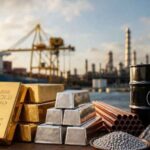
Gold prices rose to around $4,700 per ounce on Wednesday amid signs of de-escalation in Middle East tensions
Gold prices rose to around $4,700 per ounce on Wednesday amid signs of de-escalation in Middle East tensions, which could lead to lower oil prices and ease concerns over further central bank rate hikes. President Donald Trump told aides he is willing to end the war against Iran even if the Strait of Hormuz remains largely closed, while regional reports suggested Iran’s President Masoud Pezeshkian may consider ending the conflict under certain conditions. Still, gains in bullion remained limited as easing geopolitical risks reduced safe-haven demand, while a firm US dollar and elevated Treasury yields continued to weigh on non-yielding assets.
WTI crude oil futures rose toward $103 per barrel on Wednesday, recouping losses from the previous session
WTI crude oil futures rose toward $103 per barrel on Wednesday, recouping losses from the previous session and extending their record monthly jump, as markets weighed President Trump’s remarks amid fresh attacks in the Persian Gulf. Trump told reporters that US forces could withdraw from Iran within two to three weeks and suggested a deal with Tehran might be possible but was not required to end the conflict. However, markets remained cautious as additional US troops arrived in the region, and Tehran said no formal peace talks were underway but signalled willingness to end the war if its conditions are met. All eyes are now on Trump’s nationwide address on the Iran conflict later today.
Trump to address nation on Iran war Wednesday night, White House says
President Donald Trump on Tuesday said he expected that U.S. military forces will leave Iran in “two or three weeks.” “We leave because there’s no reason for us to do this,” Trump told reporters at the White House. “We’ll be leaving very soon.” Hours later, the White House said that Trump will deliver an address “to the nation to provide an important update on Iran” at 9 p.m. ET Wednesday. The U.S. and Israel attacked Iran on Feb. 28. Trump, in his comments Tuesday, brushed aside the idea of having to reach a negotiated settlement to end the war, raising the prospect that the United States could just declare victory and end hostilities. “Iran doesn’t have to make a deal,” Trump said. “It’s a new regime. They are much more accessible.”
UAE willing to join US in reopening Strait of Hormuz by force
The United Arab Emirates is preparing to help the U.S. and other allies in opening the Strait of Hormuz by force, the Wall Street Journal reported on Tuesday, citing Arab officials. The UAE is lobbying for a United Nations Security Council resolution to authorize such an operation, the WSJ report said, with Emirati diplomats seen urging American, European and Asian allies to form a coalition to reopen Hormuz. The WSJ report comes just shortly after U.S. President Donald Trump said he will wind down military operations against Iran in the coming weeks. Trump also signaled that he was open to leaving the Strait of Hormuz closed, telling allies to either buy oil from the U.S. or to reopen the strait themselves. Hormuz is a major focus point in the Iran war, with Tehran having effectively blocked the strait in response to U.S. and Israeli hostilities over the past month.
China to maintain appropriately loose monetary policy
China’s central bank pledged on Tuesday to maintain appropriately loose monetary policy, while noting growing impacts from changes in the external environment. China’s economy is broadly stable but still faces challenges such as strong supply, weak demand and external shocks, the People’s Bank of China said in the readout of its first-quarter monetary policy committee meeting. The central bank reiterated pledges for keeping liquidity ample, guiding a recovery in prices and keeping the yuan exchange rate "basically stable at reasonable and balanced levels."
Powell says Fed can ’wait and see’ how war affects inflation
Federal Reserve Chair Jerome Powell on Monday said the U.S. central bank can wait to see how the Iran war affects the economy and inflation, noting that policymakers typically look through shocks such as those from higher oil prices. "We feel like our policy’s in a good place for us to wait and see how that turns out," Powell said during a question-and-answer session held as part of a macroeconomics class at Harvard University. His remarks appeared to calm financial markets that last week had reflected rising expectations the Fed may try to head off higher inflation by raising rates. Those rate hike bets have all but disappeared. As the Iran war enters its fifth week and U.S. gasoline prices rise to around an average of $4 a gallon, Powell acknowledged the potential squeeze between the Fed’s two mandates of full employment and price stability.
IndiGo shares jump 9% after India’s largest airline names industry veteran William Walsh as CEO
Shares of InterGlobe Aviation, which runs India’s largest airline IndiGo, rose more than 9% Wednesday, a day after it named industry veteran William Walsh as its new chief executive. Walsh, 64, is currently the director general of the International Air Transport Association and will join the Indian airline in early August. Walsh has served as the CEO of British Airways. His appointment comes weeks after Pieter Elbers suddenly stepped down as IndiGo’s top boss following scrutiny over the carrier’s failure to plan properly for pilot rest and duty rules, which led to thousands of flight cancellations in December. Elbers exited the company last month, citing “personal reasons.” Indian airline companies have been particularly affected due to the airspace disruptions caused by the Middle East conflict.
OpenAI closes record-breaking $122 billion funding round as anticipation builds for IPO
OpenAI on Tuesday announced that it closed a record-breaking funding round at a post-money valuation of $852 billion. The round totalled $122 billion of committed capital, up from the $110 billion figure that the company announced in February. SoftBank co-led the round alongside other investors, including Andreessen Horowitz and D. E. Shaw Ventures, OpenAI said. OpenAI kickstarted the artificial intelligence boom with the launch of its ChatGPT chatbot in 2022, and the company has since ballooned into one of the fastest-growing commercial entities on the planet. As of March, ChatGPT supports more than 900 million weekly active users, including more than 50 million subscribers.
Unilever, McCormick strike deal to create $65 billion food giant
Unilever will merge its food business with spice maker McCormick, it said on Tuesday, creating a company worth around $65 billion in the second-largest food transaction in history. The agreement is CEO Fernando Fernandez’s biggest gambit since taking the helm in March 2025 and comes after he completed the spin-off last year of Unilever’s multi-billion-euro ice cream business, home to Ben & Jerry’s and Magnum. Though Unilever’s food unit is a high-margin business, sales growth has lagged the company’s personal goods and beauty businesses and weighed on its ambition to increase overall group sales by 4%-6% in the near term. Investor pressure to shed food brands increased after it was revealed in 2022 that billionaire activist-shareholder Nelson Peltz had built a stake in Unilever.
Nike forecasts surprise sales drop as China weakness hurts turnaround efforts
Nike’s forecast of a surprise drop in fourth-quarter sales on Tuesday sent its shares down more than 9% in extended trading, as persistent weakness in China and slow progress in clearing older inventory hamper turnaround efforts. Under CEO Elliott Hill, Nike has pulled back promotions, stepped up product innovation and refocused on core franchises like running, as it tries to reset the business after years of excess inventory and uneven demand across North America and China. But the turnaround "is taking longer than I would like," Hill said on Nike’s third-quarter earnings call. Chief Financial Officer Matt Friend projected a 2% to 4% drop in current-quarter sales, compared with Wall Street estimates of a 1.9% rise, according to data compiled by LSEG. In China, where operational missteps have collided with fierce domestic competition, Nike’s sales fell 10%.



Just having a blast on this site! The community is great and the winning streaks are feeling real today. So much fun at br777betfun