
Daily News – 10th Sep ’26
Daily News
Asia Markets Slide as Treasury Yields Jump to 4.857%; Dow Sheds 400 Points in Third Day of Declines; Brent Tops $101, Crude Holds Above $96; Apple Unveils $1,999 Foldable iPhone Duo
10 September 2026
Today in Brief
Asia markets were broadly lower Thursday, with Japan's Nikkei 225 down 0.62% and South Korea's Kospi off 0.24%, while Australia's S&P/ASX 200 fell 1.36%, Hong Kong's Hang Seng dropped 1.47% and mainland China's CSI 300 traded 0.74% lower, as higher Treasury yields kept pressure on markets after the Treasury Department said it would triple its longer-term debt buyback to $6 billion. U.S. stocks fell Wednesday for a third straight session — the Dow dropped 405.41 points, or 0.77%, to 52,380.66, the S&P 500 shed 0.48% to 7,636.36 and the Nasdaq fell 0.64% to 26,253.34 — as the 10-year Treasury yield jumped to 4.857%, its highest level since November 2023. Gold held steady near $4,400 an ounce as investors awaited key U.S. inflation readings, while crude oil held above $96 a barrel, its highest level since May, with global benchmark Brent topping $101 a barrel for the first time since July amid an intensifying U.S.-Iran conflict.
In other news: President Trump said oil and gas prices elevated by the Iran war would not fall until "right after" the November midterm elections; the U.S. denied Iranian claims that its Revolutionary Guard struck two American vessels, with Centcom saying it had destroyed 10 Iranian tankers in the past week; a Bank of Japan policymaker warned of price risks that could trigger rapid rate hikes; Chinese AI chipmakers Huawei and Cambricon sharply raised prices amid a high-bandwidth memory shortage; Apple launched a $1,999 foldable iPhone called the Duo; a survey showed U.S. firms in China growing more upbeat on their outlook as profits recover; and Visa, Mastercard and Ant International launched an initiative to develop trust standards for AI purchasing agents.
Asia markets were in the red on Thursday
Asia markets were in the red on Thursday. Japan's Nikkei 225 dropped 0.62%, while South Korea's Kospi lost 0.24%. Australia's benchmark S&P/ASX 200 was down 1.36%. Hong Kong's Hang Seng Index was down 1.47%, while the mainland's CSI 300 traded 0.74% lower. Higher Treasury yields kept the U.S. stock market under pressure after the Treasury Department said it would buy back up to $6 billion in longer-term debt – triple the usual amount. Less than a month ago, the Treasury said it would more than double the size of its government debt repurchases.
Dow tumbles 400 points, posting 3-day slide as rates jump and Brent crude tops $101
Stocks fell on Wednesday as rising Treasury yields and oil prices continued to rattle investors. The Dow Jones Industrial Average dropped 405.41 points, or 0.77%, to end at 52,380.66. The S&P 500 shed 0.48% to close at 7,636.36, while the Nasdaq Composite fell 0.64% to 26,253.34. It was the third day of declines for all three indexes. Treasury yields jumped on Wednesday after the Treasury Department said it's going to triple its buyback operation of longer-dated government debt to $6 billion. The move follows the Treasury Department's announcement last month that it's going to at least double the level of government debt buybacks. Following the announcement, the 10-year Treasury note yield rose to 4.857%, reaching its highest level since November 2023.
Gold held steady near $4,400 an ounce on Thursday, retaining gains from the previous session
Gold held steady near $4,400 an ounce on Thursday, retaining gains from the previous session as investors cautiously awaited key US inflation readings that could provide further insight into the Federal Reserve's next policy move. The US producer price index report for August is due later today, followed by the consumer inflation report on Friday. The metal found support from a weaker dollar, as well as continued demand for its long-term hedging appeal despite near-term pressure from higher oil prices and bond yields. Oil prices climbed to multi-month highs as the US-Iran conflict intensified, stoking inflation concerns and strengthening expectations for near-term rate hikes.
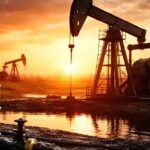
Crude oil held above $96 per barrel on Thursday, hovering at its highest level since May
Crude oil held above $96 per barrel on Thursday, hovering at its highest level since May as the intensifying conflict between the US and Iran raised concerns over further disruptions to energy supplies from the Middle East. Iran said it was ready for a more intense conflict, vowing to resist the US naval blockade and warning that it would intensify its attacks if American forces continued strikes on Iranian territory. Meanwhile, President Donald Trump predicted that the conflict would not end until after the November midterm elections and said significant relief in gasoline prices was unlikely before then, signalling limited prospects for near-term de-escalation. Hostilities intensified over the past week following roughly a month of relative calm, with both sides stepping up attacks.
Treasury Department to buy back up to $6 billion in longer-term debt, triple the normal level
The Treasury Department on Wednesday said it will buy back up to $6 billion of government debt in an operation aimed at keeping bond markets functioning. The much-anticipated announcement triples the normal buyback operation and follows a statement Aug. 19 from Treasury Secretary Scott Bessent that the department would at least double the normal amount for already-issued securities. Treasury also said future operations will be at least $4 billion. Though the operation ostensibly is aimed at keeping government debt markets liquid — in this case for 10- and 20-year notes — the extraordinary measure also has been seen as an effort to put a lid on Treasury yields, which had hit highs not seen since prior to the global financial crisis in 2008.
Trump says oil and gas prices won't fall until 'right after' midterm election
President Donald Trump on Wednesday said energy prices that have been elevated due to the Iran war will not come down until after the midterm elections, which are nearly two months away. "Right after the election, oil prices are going to be tumbling downward," Trump told reporters at Joint Base Andrews before heading to Texas for the Republican Party's midterm convention. He had been asked how he plans to explain to Americans why oil prices have just soared to highs not seen since the early weeks of the war. Global benchmark Brent crude futures on Wednesday traded above $101 per barrel for the first time since July, while U.S. West Texas Intermediate futures surpassed $96 per barrel at session highs. "I think it's very easy to explain to America," Trump said. "All you have to do is say, 'Will you let Iran have a nuclear weapon?' And the answer is no."
U.S. denies claims Iran struck two American vessels in retaliation for earlier strikes
The U.S. has denied a claim by Iran's Revolutionary Guard that its forces struck two American vessels. The Guard had said it struck the ships, along with eight oil tankers in the Gulf, in retaliation against the U.S. for destroying five Iranian tankers on Tuesday. It said the targeted vessels had attempted to cross an area of the Hormuz Strait it had designated "forbidden and unsafe," according to a statement published by semiofficial Tasnim News Agency. But U.S. Central Command responded later on Wednesday, saying, "No U.S. Navy warship has been struck; all IRGC attempted attacks failed." "Meanwhile, U.S. forces have successfully destroyed 10 Iranian tankers in just the last week. These vessels were part of a multibillion-dollar shadow network that funds the IRGC, and Iran cannot defend them," Centcom added on X.
BOJ policymaker warns of price risks that may trigger rapid rate hikes
The Bank of Japan may eventually be forced to raise interest rates rapidly if inflation accelerates given the country's loose financial conditions, board member Kazuyuki Masu said, warning of price risks that solidify the chance of a September hike. In a closely watched speech ahead of next week's policy meeting, Masu gave no specific hints on the pace and timing of future rate hikes, but warned of broadening price pressures that have pushed underlying inflation "very close" to its 2% target. He also said the BOJ must pull real interest rates out of negative territory as soon as possible, signalling his concern over the demerits of too-low borrowing costs. A recent spike in producer prices warrants attention, as it could push up consumer inflation more than in the past, with companies actively passing on higher costs from the Middle East conflict and the weak yen, Masu said on Thursday.
China's AI chipmakers raise prices as high-bandwidth memory shortage bites
Chinese AI chipmakers including Huawei Technologies and Cambricon have sharply raised prices for current and next-generation AI processors, three people familiar with the matter said, as soaring costs for high-bandwidth memory squeeze efforts to build domestic alternatives to Nvidia. Huawei has lifted the indicated price of its Ascend 950DT accelerator card, which integrates an AI processor with memory and other components, to above 250,000 yuan ($37,255), two people said. The increase represents a jump of 20% to 50% from prices quoted to customers just two months ago, depending on contract terms, they said. Shenzhen-based Huawei has publicly said the 950DT, its most advanced AI chip, will be available in the fourth quarter of 2026.
Apple joins foldable phone race with $1,999 passport-shaped iPhone Duo
Apple on Wednesday redefined its flagship smartphone with the launch of the Duo, a folding $1,999 iPhone, betting its design and promises of data privacy will let it leap ahead of rivals who have been selling folding phones for years. The Duo could shake up a category long dominated by Samsung and Chinese companies like Huawei, whose devices have struggled to move beyond a niche audience. Analysts have long said Apple's entry could be the catalyst foldables need, helping bring the form factor into the mainstream much as the company did with smartwatches and wireless earbuds. The Duo is sized and shaped like a passport, with rounded edges. It opens into a horizontal, 7.6-inch-diagonal (19 cm) screen that also can be viewed vertically. There is a smaller single screen on the front, when the phone is folded. When open, it is Apple's thinnest phone, the company said. However, it is thicker than folding phones offered by Chinese rivals.
US firms in China more upbeat on outlook as profits recover, survey shows
U.S. companies in China have grown more optimistic about their business prospects after confidence hit a record low last year amid political tensions, intense domestic competition and slowing economic growth, a survey showed on Thursday. The annual survey by the American Chamber of Commerce in Shanghai (AmCham Shanghai) found that 58% of respondents were optimistic about their five-year outlook, up 17 percentage points from a year earlier and ending a four-year stretch of historically low confidence. The findings suggest U.S. businesses are gaining confidence as Washington and Beijing seek to stabilise relations following a trade truce late last year that paused a fresh escalation in tariffs and other restrictions. Companies are also looking for further signs of improving ties ahead of Chinese President Xi Jinping's expected visit to Washington later this month.
Payment firms Visa, Mastercard and Ant International team up on AI agent trust framework
Ant International, Mastercard and Visa have launched an initiative to develop common standards to identify and verify AI agents that can make purchases on behalf of users. Here are some details: The companies said on Thursday they had begun collaborating on a Know-Your-Agent interoperability framework that would allow card networks, digital wallets, agent platforms and online marketplaces to recognize trusted AI agents across different payment ecosystems while maintaining their own approval and risk-management processes. The initiative comes as the payments industry prepares for the growth of agentic global consumer commerce, in which AI agents evolve from making recommendations to completing purchases on behalf of users.




I’ve been looking for a reliable spot like this for a while. The interface is super smooth and the payouts are quick. Definitely check out inwln379 if you want a fair game.
The graphics are top-notch and the overall feel is very professional. It feels like a real luxury casino from home. winnacasino is simply the best.